


 Metropolitan France
 United Kingdom
 Deutschland
 Belgique
 Suisse
 Österreich
 España
 Italia
 Danmark
 Sverige
 Portugal
 Polska
 Luxembourg
 Other countries


Available colours:






Available colours:


Available colours:

Available colours:


Available colours:

Available colours:


Available colours:

Available colours:

End of the Season for Snow Series
Up to 70% off items at the end of the season for snow*

Available colours:

Available colours:

Available colours:


YOUR FREE BAG
Get a free ski bag with the purchase of skis, a snowboard, or shoes*


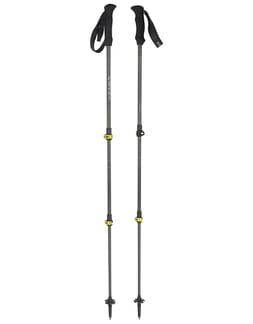
A true extension of your body on the trails, trekking poles support every step, whether you're hiking on marked paths in the hills or embarking on a multi-day trek. At Snowleader, we offer a selection designed for all terrains and outdoor activities, from classic telescopic models to ultra-lightweight foldable poles from specialist brands.
A wide range of trekking poles at Snowleader
As a dedicated outdoor and leisure retailer, Snowleader provides hiking enthusiasts with a vast choice of accessories and equipment, with a special focus on trekking poles. Our catalogue features leading brands: Black Diamond for their proven foldable trail models, Leki for their renowned adjustable locking systems, TSL Outdoor for French-made trail and hiking poles, and Guidetti, a historic brand also manufacturing in France. Whether you're new to hiking or a seasoned trekker, you'll find the right model for your needs, body type, and budget in stock.
Trekking poles: the hiker's best ally
Hiking brings many joys: it's perfect for fresh air away from the city, maintaining fitness at your own pace, or exploring beautiful regions. However, it does require some preparation and quality equipment.
Walking for hours on uneven trails puts strain on your joints, especially the knees on descents, where your body absorbs up to three times its weight with each step. To reduce this impact, specialist manufacturers have developed a full range of trekking poles, now as essential as walking boots or a rucksack for outdoor gear.
Used in pairs, poles distribute effort to the upper body, stabilise movement on technical terrain, and secure tricky sections like stream crossings or scree. To help you choose, our team has gathered their favourites in a selection of the best trekking poles on our blog.
The different types of trekking poles
The trekking pole market has diversified greatly in recent years, with models designed for specific uses. Understanding the construction differences will help you choose the right pole for your activity, whether it's a Sunday walk, a demanding multi-day trek, a trail run, or a specific activity like Nordic walking or ski touring.
Telescopic trekking poles: pros and cons
Built with sections that slide into each other, telescopic poles remain the reference for most trekking and hiking pole users. Their locking systems, whether internal twist or external lever (like SpeedLock by Leki), allow precise length adjustment to suit the terrain: shorten for uphill efficiency, lengthen for downhill support. Two or three-section aluminium construction offers appreciated durability, though they are bulkier when folded.
- Advantages: precise adjustment, high durability, versatile on all types of trails.
- Disadvantages: longer when folded, slightly heavier than foldable models.
- Ideal use: day hikes, multi-day treks, regular use in hills and mountains.
Foldable poles: lightweight and practical
Ever needed to stow your poles mid-race to climb or fit them in a trail pack? Foldable poles, made of three or four sections connected by a Kevlar cable, are designed for these situations. They deploy or fold in seconds, compacting to around thirty centimetres. This design is found in top models like the Black Diamond Distance Carbon Z or Leki Ultratrail FX One, favoured by trail running pole users and mountaineers for their compactness and featherweight, often under 350 grams per pair.
- Advantages: minimal bulk, instant deployment, lightweight.
- Disadvantages: less height adjustment, higher price for similar quality.
- Ideal use: trail, ultra-trail, mountaineering, fast hiking with technical sections.
Nordic walking poles: a specific movement
Nordic walking uses a backward push engaging the upper body, and the equipment is adapted to this technique. Nordic walking poles are usually single-section or two-section telescopic, with a length calculated so the elbow forms a slightly obtuse angle for propulsion. Their key feature is the glove-like strap, which detaches from the pole with a simple press: you can release the grip at the end of the push without dropping the pole, essential for a smooth technique.
Ski touring poles: winter strength and versatility
In winter, the demands change: deep snow, steep slopes, alternating skinning ascents and ski descents. Ski touring poles feature large snow baskets to prevent sinking, extended foam grips for holding lower on traverses, and robust adjustment systems resistant to freezing. Brands like Dynafit offer models designed for these specific needs.
How to choose the right material for your trekking poles
Carbon or aluminium: which material to choose?
Material choice is crucial, affecting weight, durability, and price. Aluminium, often in 7075 aerospace alloy, is a safe bet for regular mountain use. It's tough and bends rather than breaks if trapped, letting you finish your hike. Carbon stands out for its lightness and vibration absorption, key for long distances and those counting every gram.
- Aluminium: durable, shock-tolerant, affordable. Ideal for classic hiking and technical terrain.
- Carbon: up to 30% lighter, excellent shock absorption, more fragile to side impacts. Favoured for trail and fast hiking.
- Carbon/aluminium hybrid: a good compromise, with lightweight upper sections and robust lower sections for impact resistance.
Adjusting the size of your trekking poles
Tips for optimal adjustment
Poorly adjusted poles lose much of their benefit and can cause shoulder and forearm fatigue. The standard rule for flat ground: hold the pole vertically with the tip on the ground-your elbow should form a right angle, forearm parallel to the ground. For a quick estimate, multiply your height in centimetres by 0.68: someone 1.75 m tall would need a pole around 119 cm.
This basic setting can be adapted to the trail, which is the main advantage of adjustable models:
- Uphill: shorten by 5 to 10 cm for efficient horizontal push.
- Downhill: lengthen by 5 to 10 cm to keep your torso upright and protect your knees.
- Undulating terrain: keep the standard setting and adjust strap pressure as needed.
Essential accessories for your trekking poles
Beyond the pole itself, several pole accessories complete your kit and let you adapt to changing conditions. Many of these parts are interchangeable and fit easily in a rucksack side pocket.
Baskets and tips: choose for the terrain
The tip is the contact point with the ground and directly affects grip. Tungsten carbide tips, standard on most mid- and high-end poles, bite well on rock and frozen ground. Various baskets and tips can be combined:
- Rubber tips: for tarmac, limestone slabs, or smooth surfaces to preserve grip and reduce noise.
- Large baskets (snow): essential for winter or ski touring, they prevent the pole from sinking in powder.
- Small baskets (trekking): perfect year-round on dry trails, they remain discreet while providing support.
- Ergonomic straps: relieve grip, optimise power transfer, and reduce the risk of losing a pole if you slip.
Trekking poles FAQ
What is the correct height for a trekking pole?
The correct height is easy to check: hold the pole vertically with the tip on the ground-your forearm should form a right angle with your arm. For a quick calculation, multiply your height in centimetres by 0.68 for the ideal length on flat ground. An adjustable model is best if you expect varied terrain, so you can adapt the length to the slope.
How do you maintain trekking poles?
After each outing, disassemble the sections of telescopic poles and wipe the inside with a dry cloth: residual moisture, especially with sediment, is the main cause of locking system jamming. Regularly check the condition of levers or internal screws, and replace tips as soon as they show significant wear to maintain good grip. For foldable models, periodically check the tension of the internal Kevlar cable, which can loosen over time.
Which trekking poles should I choose for my outdoor activity?
The choice depends mainly on your activity and how often you do it. For classic hiking and multi-day treks, a telescopic aluminium pole offers the best balance of strength, versatility, and price. Trail runners and mountain racers will prefer foldable carbon models for compactness and light weight. For Nordic walking, specific poles-shorter and with glove-like straps-allow a full backward push. For ski touring and winter outings, choose adjustable poles with large snow baskets and reinforced carbide tips.


Sign up for our newsletter
Be the first to hear about promotions, sales, special offers, snowleader events, and new brands added to our catalog!
By signing up for our newsletter, you agree to receive our personalized emails and to allow us to track whether you open them. You can change your consent at any time after you first receive a communication, or after creating your account, if applicable.


