


 Menu
Menu


MTB helmets


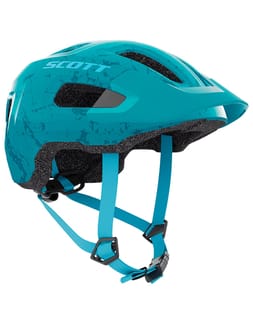
Helmet Supra Jr (Ce) Cerulean Blue
MTB helmet – Children’s – S




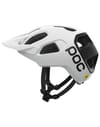
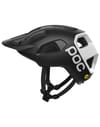


Mainline MIPS Matte Black
MTB helmet - Unisex -



Whether you're heading out for a leisurely ride or tackling a challenging downhill session, wearing a mountain bike helmet is essential. More than just a piece of equipment, it's your first line of defence against unpredictable terrain. Explore our range of MTB helmets designed to combine safety, comfort, and ventilation, from demanding cross-country to the most technical descents.
Why choose the right MTB helmet for your riding?
On the trails, conditions are constantly changing: slippery roots after rain, loose rocks on descents, low branches in the woods. The right MTB helmet does more than absorb impacts-it stays secure on your head and effectively manages heat during long climbs. This balance of protection, ventilation, and comfort is what separates a helmet you forget you're wearing from one that becomes a distraction.
Key safety and comfort features
For true functionality, a mountain bike helmet must combine two factors: protection and ventilation. First, ensure your helmet is certified to European standard EN 1078, guaranteeing impact absorption that meets cycling requirements. Depending on the model and your intended use, weight can also be important. The shape can influence comfort as well. Several elements deserve special attention when making your choice:
- EN 1078 certification, essential for safe MTB riding.
- Retention system, usually adjusted by a dial at the back for a precise fit.
- Inner padding, ideally removable and washable to maintain comfort over time.
- Chin strap, adjustable and equipped with a secure buckle, often magnetic on recent models.
The different types of MTB helmets
Each MTB discipline has its own demands, and manufacturers have responded accordingly. Full-face helmets with a chin guard are designed for downhill and enduro riding, where impacts can be particularly severe. Some models offer a removable chin guard, allowing you to switch from full-face for descents to open-face for climbs-ideal for enduro versatility. Lighter and more ventilated, open-face helmets are perfect for cross-country and trail riding, with extra coverage at the back of the head and over the temples. There's also a dedicated kids' and junior range, with adjusted sizing and simplified adjustment systems, available in our kids' MTB helmets section.
How to choose the right MTB helmet?
Having an ergonomic helmet suited to your head shape and riding style ensures your experience isn't compromised. A helmet that restricts your vision or isn't comfortable can quickly become a problem. To help you decide, we've gathered our selection of the best MTB helmets with detailed reviews of the season's must-have models. Our men's MTB helmets and women's MTB helmets sections also let you refine your search by fit.
Considering size and fit
Determine your size by measuring your head circumference with a tape measure, about 2 cm above your eyebrows at the widest part of your head. Each brand has its own sizing guide, so always check before ordering, as a size S from one brand may be an M from another. A properly fitted helmet sits flat on your head, doesn't drop over your eyebrows, and stays in place when you shake your head-even with the chin strap undone. If the helmet tilts forward or back, the fit isn't right for your shape.
The importance of ventilation and weight
Ventilation becomes crucial as temperatures rise or climbs get longer. Well-placed vents aligned with airflow help wick away sweat and prevent overheating on ascents. Weight is just as important for comfort: expect 250-350 grams for an XC helmet, 350-500 grams for an open enduro model, and sometimes over 900 grams for a full-face downhill helmet. The goal is to find the right balance between protection and lightness, depending on your riding and terrain.
Innovative technologies in MTB helmets
Manufacturers are constantly innovating to push the boundaries of safety without sacrificing comfort. In recent years, advances in impact absorption and lighter structures have transformed the range, even in entry- and mid-level models.
MIPS technology for enhanced protection
How can you reduce the risk of injury from an angled impact, which is much more common than a direct frontal hit? The MIPS system (Multi-directional Impact Protection System) answers this: a thin yellow inner layer allows slight movement between the shell and your head during impact. This small movement absorbs some rotational forces, which are responsible for many concussions. Widely available from brands like POC, Scott, and Smith, MIPS is now considered a standard for safety-conscious riders.
Advanced materials for lighter helmets
Most current models use high-density polycarbonate shells combined with multi-density EPS foam. Smith stands out with its honeycomb Koroyd structure, featured in several top-end models: these thermowelded polymer cells improve impact absorption and airflow, resulting in helmets that are both more protective and better ventilated. The result: helmets that are more comfortable on long rides and often more stable thanks to better weight distribution.
Top MTB helmet brands available at Snowleader
The Snowleader range brings together the leading names in MTB helmets, with brands reflecting the diversity of riding styles. Scott is a standout, with models like the Argo Plus, Tago Plus, and Stego Plus covering everything from aggressive trail to cross-country, offering great value and MIPS integration on most models. Discover all MTB helmets in stock at Snowleader from top brands like POC, Smith, and Julbo.
Each brand has its own identity. POC, the Swedish manufacturer known for its clean design and strong safety focus, equips many professional enduro and downhill riders. Smith, an American brand from the optics and ski goggle world, has made its mark in MTB helmets with its signature Koroyd: flagship models like the Forefront, Session, and Mainline combine premium finish, lightness, and excellent ventilation-especially valued on long trail and enduro rides. Julbo, another French reference and optics specialist, offers a smaller but coherent range, ideal for those who value helmet and goggle integration. Snowleader offers a varied selection so you can choose your MTB helmet according to your needs and riding style. You'll also find all your MTB gear at Snowleader, from gloves and clothing to additional MTB protection, so you can ride with confidence whatever the conditions. To explore our full range, visit our MTB section.
MTB helmet FAQ
What is the lifespan of an MTB helmet?
The average lifespan of an MTB helmet is 3 to 5 years with normal use, even without any impacts. EPS foam and shell materials naturally age due to UV, sweat, and temperature changes. After a significant impact, even if there's no visible crack, replacement is essential: the foam may have compressed internally and lost some of its shock-absorbing properties, compromising protection in future impacts.
How do you care for your MTB helmet?
To keep your helmet in good condition, clean the shell with a damp cloth and mild soap, avoiding any harsh products or solvents that could damage the materials. Removable inner pads should be hand-washed in lukewarm water and air-dried out of direct sunlight. Store your helmet in a dry, temperate place, away from heat sources like a car boot in summer, which can irreversibly damage the foam.
Can you use an MTB helmet for other mountain sports?
Each sport has its own certification standard and protection requirements. An MTB helmet meets EN 1078, while climbing requires EN 12492 and skiing EN 1077. Protection zones and impact tests differ, so it's best to use each helmet for its intended purpose. For high-speed e-MTB (over 25 km/h), the reinforced NTA 8776 standard is recommended.
What accessories are compatible with MTB helmets?
Most modern MTB helmets are designed to accommodate various useful accessories:
- Action cameras like GoPro, attached with adhesive or clip mounts on the top or chin guard.
- Front and rear lights for safer rides at dusk or in shaded woods.
- Removable visors with adjustable height, to shield from low sun or mud splashes.
- MTB goggles and sunglasses shaped to fit the front of the helmet without blocking ventilation.


Our Bloch' letter


