


 Menu
Menu


Running insoles


3Feet Run Protect Mid
Road running insoles -
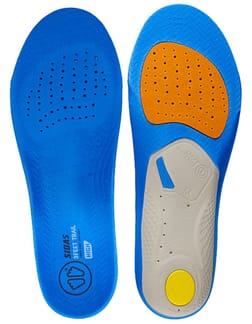
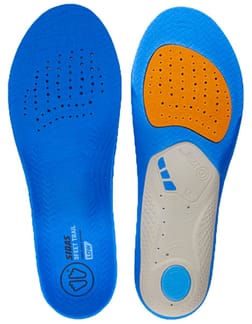
Whether you're clocking up miles on tarmac or tackling mountain trails, your running insoles play a crucial role in the comfort and protection of your feet. Often overlooked in favour of the shoe itself, they deserve your full attention: they're the first point of contact between your foot and the ground with every stride and every impact.
Why choose running insoles?
Enhanced comfort and performance
The standard insoles supplied with most running shoes offer minimal support. By replacing them with running insoles made from technical materials, you benefit from improved cushioning, stability, and energy return. Your stride becomes smoother, your foot is better supported in the shoe, and ground feel is enhanced. Whether you're training for a marathon or running for pleasure, a pair of insoles adapted to your foot shape can transform your experience. For the best results, pair them with the best running shoes for your needs.
Injury prevention and foot protection
Plantar fasciitis, shin splints, knee pain: these common runner's issues often stem from poor cushioning or uncorrected biomechanical imbalances. Quality running insoles absorb repeated shocks and distribute pressure evenly underfoot, relieving the joints with every impact. Runners with flat feet, high arches, or excessive pronation will find them especially effective for prevention, allowing you to run confidently, session after session.
How to choose your running insoles?
Know your arch type
Before buying, it's essential to identify your arch type, as this determines the level of support you need. There are three main profiles:
- Flat foot: the arch collapses and the foot rolls inward (overpronation). Insoles with reinforced arch support help correct this imbalance.
- Neutral foot: the stride is naturally balanced. Versatile models with even cushioning are ideal.
- High arch: a pronounced arch makes the foot rigid and less able to absorb shocks. Opt for extra cushioning at the heel and forefoot.
A wet footprint test gives a reliable first indication. For a full diagnosis, a sports podiatrist can analyse your gait and measure pressure points under each foot.
Match your insoles to your activity
Your running terrain determines the type of insole to choose. On the road, cushioning and energy return are key for absorbing miles on hard surfaces. On trails, stability and lateral support are essential for tackling technical mountain terrain. For daily training, prioritise durability and insoles that maintain consistent cushioning over time. For races, lightweight models boost responsiveness without sacrificing support.
In terms of compatibility, most running insoles fit into shoes from leading brands. Just check that the size matches your shoe and that the thickness suits the internal volume. If you also run trails, explore our selection of trail insoles for support designed specifically for rugged terrain.
Running insole technologies and design
Technology and innovation
With over 45 years of expertise in foot comfort, Sidas is a leading name in running insoles. The French brand has developed heat-moulding for insoles: after a few minutes of warming, the insole perfectly matches your foot shape for tailored support. Different models offer varying thicknesses and support levels to suit every runner, from beginners to competitors.
Comfort and durability
What sets a quality running insole apart over time is its ability to maintain consistent cushioning over many miles. High-density foams resist compression where standard insoles flatten quickly, and antibacterial treatments help prevent odours while keeping your feet dry. Other manufacturers also offer innovative approaches to support and cushioning. Snowleader features the most reliable brands so you can compare and find the insole that truly matches your stride.
FAQ: Your questions about running insoles
What is the difference between standard running insoles and orthopaedic insoles?
Standard running insoles are designed to improve comfort and cushioning for all runners, regardless of level. Orthopaedic insoles, on the other hand, are prescribed by a healthcare professional to correct a specific issue: excessive pronation, leg length discrepancy, or foot pathology. If you suffer from chronic pain, consult a podiatrist before making your choice.
When should you replace your running insoles?
Several signs indicate it's time: reduced cushioning and increased impact, the insole collapses at the arch, or you experience new pain in your feet, knees, or back. As a rule of thumb, replace your running insoles every 800 to 1,000 kilometres, or roughly every 6 to 12 months depending on usage.
How do you care for your running insoles?
Remove your insoles after each run and let them air dry away from direct heat, which could damage technical materials. Regular cleaning with a damp cloth and mild soap is enough to keep them hygienic. Avoid machine washing: cushioning foams and structural reinforcements can't withstand mechanical agitation. This care will significantly extend the life of your insoles.
Can you use running insoles for other outdoor sports?
Some versatile running insoles are also suitable for hiking, trekking, or fitness. However, each activity puts different demands on your feet: lateral support in trail running differs from the needs of long mountain walks. For regular and intensive participation in a specific sport, dedicated insoles offering the right support and cushioning are preferable.
Discover our selection of men's running shoes and women's running shoes at Snowleader to complete your kit and run in the best conditions.


Our Bloch' letter


