


 Menu
Menu


Camping hammocks, bivouac hammocks & hiking hammocks


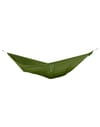


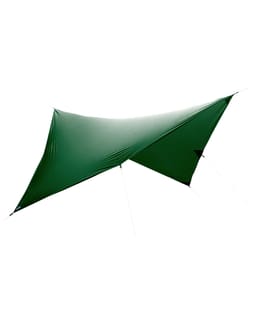









How to Choose the Right Camping Hammock?
Whether you're wild camping or finishing a long day of hiking, a camping hammock has become a lightweight and comfortable alternative to a tent. It can be set up in minutes between two trees, freeing you from uneven ground and suiting both multi-day treks and relaxing breaks by a mountain lake. But choosing the right model for your needs is key: here are the criteria that really make a difference outdoors.
Key Criteria for Choosing
For campsite stays or relaxing in your garden, go for a wide hammock: the more generous the fabric, the more it wraps around your body and stabilises your sleeping position. If you want to take it everywhere, choose a lightweight, compact hammock. A single hammock is ideal for use in the wild, while travelling, or even in the woods. Before deciding, consider these important factors:
- Weight and pack size: Parachute fabric models often weigh less than 500g and pack down to the size of a banana, a real advantage when every gram counts in your backpack.
- Sleeping width: A wide fabric allows you to lie diagonally, which is flatter and more restful for your back.
- Maximum load: Make sure it matches your build; most models support 150 to 200kg in normal use.
- Material: Parachute nylon remains the benchmark for combining lightness, strength, and breathability.
Comfortable and Good for Your Back?
Contrary to popular belief, a well-set hammock doesn't wrap you in an uncomfortable banana shape. The fabric moulds to your body and distributes pressure points evenly, as long as you lie slightly diagonally rather than straight. The sleeping surface then becomes almost flat. A suspension that's neither too tight nor too loose, with an angle of about 30° at the straps, ensures healthy support for your spine, even over several consecutive nights.
How to Set Up Your Hammock Easily
Once you know how, hanging a hammock takes less than five minutes. First, find two solid anchor points, three to four metres apart: two healthy trees are ideal, but a vehicle or dedicated stand works too. Attach your tree straps at about 1.5m high, using wide straps to protect the bark, then connect the hammock to the straps with the supplied carabiners or hooks. Adjust the tension for a nice curve, then settle in diagonally for true relaxation.
Our Selection of Camping Hammocks
At Snowleader, discover a wide range of camping hammocks chosen for outdoor use. Whether you want maximum comfort or minimal weight, you'll find what you need! To help you choose, we've split our range into two main types based on how you'll use them.
Lightweight Hammocks for Travel
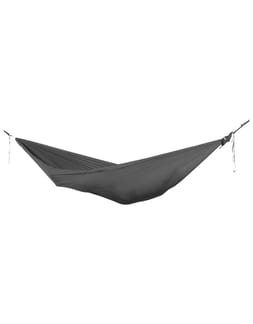
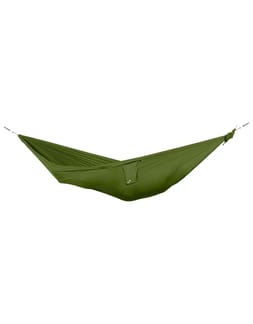
Check out the hammocks from Ticket to the Moon, ultra-light and made from parachute fabric. These are the best models for travel, thanks to their comfort, minimal weight, and easy setup. The 100% nylon fabric, inherited from the parachute industry, dries quickly and doesn't hold moisture-two key qualities for multi-day treks where you pack up early each morning. When weight is a top concern, such as on multi-day hikes, these compact models are perfect for your backpack.
Comfort Hammocks for Relaxation
When weight isn't a priority-at the campsite, in the garden, or on a fixed pitch-wider or even double hammocks are best. More spacious, they create a cocoon where you can relax, read all afternoon, or sleep for two, with only a little extra bulk.
Essential Accessories for Your Hammock
A hammock alone is rarely enough for a full night outdoors. A few well-chosen accessories transform the experience and extend the life of your gear:
- Straps and fixings: Wide and knot-free, they allow quick setup while protecting tree bark.
- Mosquito net: Essential in summer or damp areas to keep insects away while you sleep.
- Protective tarp: Shields you from rain and morning dew.
- Underquilt, mat or overbag: Insulates the underside of the hammock, where cold creeps in first. An insulated mat under the fabric or a sleeping bag suited to the season makes all the difference on chilly nights.
You'll find all these accessories-from Moon Straps to tarps, mosquito nets, and the Moonquilt underquilt-at Ticket to the Moon, the perfect complement to a successful suspended sleep setup.
Camping Hammock FAQ
Hammock or Tent: Which to Choose for Wild Camping?
It depends on the terrain and your needs. Hammocks excel in forests and wooded areas, offering a lightweight, elevated sleeping solution away from uneven ground; they're less suitable at altitude or in open spaces where there are no anchor points. Tents are better on open ground and in very cold weather. Many outdoor enthusiasts own both and choose depending on their route.
What Distance Should There Be Between Anchor Points?
Ideally, allow three to four metres between your two trees. Less than that and the fabric will sag, making sleeping uncomfortable; more than that and the straps will be overstretched. Choose healthy trunks at least fifteen centimetres in diameter and attach your straps about 1.5m high to get the right curve once set up.
Can You Use a Camping Hammock All Year Round?
Yes, as long as you adapt your gear to the season. A simple fabric is enough for summer nights, while an insulating underquilt, overbag, and tarp make the hammock comfortable in spring and autumn, or even in winter for experienced campers used to cold conditions.


Our Bloch' letter


