


 Metropolitan France
 United Kingdom
 Deutschland
 Belgique
 Suisse
 Österreich
 España
 Italia
 Danmark
 Sverige
 Portugal
 Polska
 Luxembourg
 Other countries






20% off
On the entire city section* with the code CITY20*

Available colours:


Available colours:


Available colours:


Available colours:

Available colours:


Available colours:



FALL SALE: UP TO 50% OFF
On a wide selection of products*

Available colours:
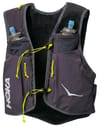
An essential companion for outdoor enthusiasts, a hydration backpack allows you to stay hydrated easily during activity without having to stop. Whether you're hiking, trail running, mountain biking or ski touring, discover on Snowleader a complete selection of backpacks with integrated hydration bladders or reservoirs, designed to support every mountain adventure.
Why choose a backpack with an integrated hydration system?
The benefits of a built-in hydration system
During physical activity, having a hydration system is crucial, and it quickly becomes a matter of both performance and safety on long outings or in hot weather. Drinking regularly during exercise helps conserve energy, maintain focus on technical sections, and delay the onset of cramps. A backpack equipped with a hydration system gives you the valuable advantage of keeping your hands free while having water within easy reach, which transforms the experience on rough terrain or during prolonged effort.
The practical benefits of a backpack with an integrated hydration system include:
- regular hydration without breaking your stride, especially valuable on long trails or ski touring trips;
- better weight distribution across your back thanks to ergonomic straps that reduce pressure points;
- space-saving design, with compartments to separate hydration from the rest of your gear;
- versatility for everything from summer hiking to mountaineering, mountain biking or ski touring.
Several leading brands specialise in this segment, each with their own approach to hydration backpacks, from technical models by Salomon to more versatile options from Osprey and Deuter.
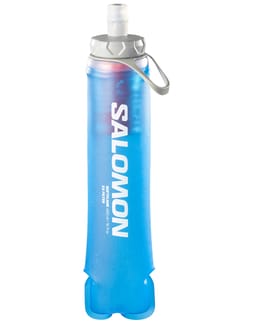
For the most intense activities like mountain running or ultra-trail, you can also complete your kit with soft flasks designed for trail running, which fit directly into the front straps for immediate access without slowing your pace.
Hydration bladder vs water bottle: which to choose?
The hydration bladder is practical because the mouthpiece is easily accessible while running, making it the preferred system for trail running and mountain biking. The downside is that refilling at aid stations is less quick and easy than with a simple water bottle. Conversely, soft or hard bottles can be used as a main or backup hydration system, with the advantage of quick refilling at a fountain or stream. It's worth trying both systems to see if carrying water at the front of your pack suits you.
To help you decide, here are the main differences between the two options:
- the hydration bladder and its accessories fit into a dedicated compartment and allow you to drink via a tube, also called a hydration hose, with a bite valve. Capacity is usually between 1 and 3 litres;
- the soft or hard water bottle fits into a side bottle holder or the front straps. It's quicker to refill and check visually, which is a real advantage for managing your hydration independently.
Many models now offer a removable hydration system, which is especially useful for switching according to activity, making reservoir cleaning easier, or lightening your pack when a simple bottle is enough. This is the case with several models from Osprey and Deuter, which let you remove the bladder without taking the whole pack apart.
How to choose your hydration backpack
Selection criteria by activity
What's your main activity? The answer guides your choice, as a pack designed for trail running doesn't have the same volume, fit, or technical features as one for ski touring. To help you narrow it down, here are the key points to consider for each discipline:
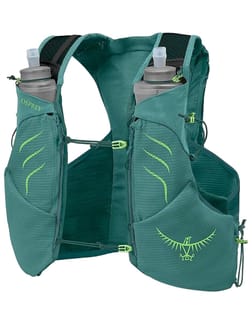
- for trail running and mountain races, choose a lightweight, close-fitting hydration vest (5 to 12 L) with front flasks, like Salomon models;
- for day hiking, a 20 to 30 L pack with a 2 L bladder and multiple storage pockets is an excellent compromise;
- for mountain biking, a compact, well-ventilated model with a 1.5 to 3 L bladder and a stabilising hip belt is best suited;
- for ski touring or mountaineering, opt for a pack with an insulated sleeve on the hose, essential to prevent water from freezing in low temperatures.
To refine your choice of capacity based on the duration and intensity of your outing, our guide to choosing the right hiking backpack size provides all the key information.
Materials and their impact on comfort
A hydration backpack is also judged by its materials, as they play a major role in comfort on long outings. Technical fabrics like ripstop nylon or high-density polyester offer a good balance between abrasion resistance and lightness, while trail-oriented models use ultra-light stretch mesh to fit the body's shape. For carrying comfort, perforated foam or 3D mesh on the straps and back panel significantly improves ventilation, which is crucial in hot weather or during intense effort. Finally, a support system combining a hip belt and chest strap stabilises the load and prevents uncomfortable swinging, even on technical descents.
Care and durability of your hydration backpack
Cleaning the hydration bladder and tube
Regular maintenance of your hydration system is essential to prevent bacteria and mould, especially after using energy drinks. After each use, rinse the bladder and tube with warm soapy water, then let them dry completely, ideally by hanging the open bladder upside down to allow air to circulate inside. For deep cleaning, use specific cleaning tablets like Micropur or a mix of warm water and baking soda, which removes deposits without damaging the materials. Special brush kits, with a thin brush for the tube and a larger one for the reservoir, are also useful additions to your cleaning kit.
Extending the life of your backpack
A few simple habits will help your hydration backpack last for many seasons:
- always empty and dry the bladder after each outing;
- store it in the freezer between uses if there's a long gap, an effective trick to prevent bacterial growth;
- avoid sugary or isotonic drinks in the reservoir, or clean it immediately after use if you do;
- store the whole pack in a dry, ventilated place, away from direct sunlight which can weaken technical fabrics.
FAQ about hydration backpacks
How do you attach a water bottle to a backpack?
Most backpacks have elastic mesh side bottle holders for standard hard bottles. For soft bottles, choose models with front strap pockets, a very common feature on trail vests. You can also add a carabiner or elastic strap to the external daisy chain loops to secure an extra bottle.
What type of bottle is compatible with a backpack bottle holder?
Elastic mesh side holders fit most hard bottles from 500 ml to 1 L, whether classic bottles, stainless steel bottles or food-grade plastic models. For front straps, soft flasks from 150 to 600 ml are the standard, especially from Salomon and Osprey, who offer wide ranges. Just check the diameter of the holder before buying, as some are sized for specific containers.
Can you use a hydration backpack for other outdoor activities besides hiking?
Absolutely. Hydration backpacks are easily adapted to many activities: trail running, mountain biking, ski touring, mountaineering, climbing, via ferrata, long-distance trekking, road cycling or Nordic walking. It's all about matching the pack's volume, fit and technical features to the intensity of your main activity. For versatile use, a 5 to 15 L model with a removable bladder is the best all-round choice.



Sign up for our newsletter
Be the first to hear about promotions, sales, special offers, snowleader events, and new brands added to our catalog!
By signing up for our newsletter, you agree to receive our personalized emails and to allow us to track whether you open them. You can change your consent at any time after you first receive a communication, or after creating your account, if applicable.


