


 Menu
Menu


Climbing crash pad


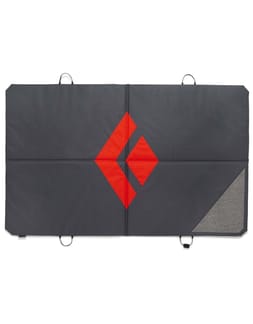
Circuit Z Pewter
Climbing reception mat -






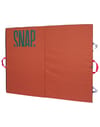


Circuit Rust Orange
Climbing landing mat -






Climbing crash pads: find the ideal bouldering landing mat
Whether outdoors on natural rock or indoors on artificial walls, bouldering is a demanding climbing discipline. To keep your sessions safe, it's essential to use a climbing crash pad to cushion potential falls. Discover a selection of crash pads from leading brands such as Black Diamond, Snap, and Petzl on Snowleader.
Why use a crash pad for climbing?
The crash pad is a fundamental piece of bouldering equipment outdoors, as it's your main safety device. Unlike roped climbing, bouldering is done without a rope: the crash pad is your only protection against falls. You'll also need a good spotter-a partner who helps guide your fall onto your feet rather than your back.
Safety and shock absorption
A quality climbing crash pad uses a multi-layer foam system. The top layer, which is firmer, spreads the impact over a wide area, while the softer bottom layer absorbs the shock. This combination significantly reduces the risk of injury to ankles, back, and joints, even during repeated falls from high boulders.
Portability and carrying comfort
Getting to a bouldering site often involves a long walk-in, so carrying comfort is as important as performance. Modern crash pads fold in two or three and feature padded shoulder straps, a waist belt, and side handles for easy transport. Some models even include internal pockets for your climbing shoes, chalk brush, or personal items.
How to choose the right crash pad?
Key criteria: size, thickness, weight
On Snowleader.com, you'll find various types of crash pads with different foam thicknesses, so you can climb with confidence while minimising risk. To help you choose, pay special attention to these three criteria:
- Size: a standard crash pad measures around 100 x 120 cm. The larger the landing area, the safer the cushioning. Match the dimensions to the height of the boulders you climb: for high problems or uneven landings, combining several pads is the best option.
- Thickness: usually between 8 and 15 cm. Thicker pads offer better shock absorption but are bulkier and heavier.
- Weight: typically between 4 and 8 kg depending on the model. If you have a long approach, a lighter crash pad will make the walk-in much easier.
The different types of crash pads
Depending on your needs and the terrain, several crash pad formats are available:
- Classic (folding) crash pad: the most common, folds in two for transport and offers a good balance between surface area, cushioning, and portability.
- Taco (rolling) crash pad: rolls up instead of folding, eliminating the central hinge that can create a weak spot on landing.
- Supplementary (satellite) crash pad: smaller and thinner, used alongside a main pad to cover tricky landing zones or fill gaps between pads.
Transport is also important for comfort. Check which carrying systems are most practical for you. Crash pads can feature useful accessories to make life easier: buckle straps for secure closure, removable shoulder straps for easy carrying, and handles for quick repositioning.
The best crash pad brands
With models like the Mondo and Drop Zone, Black Diamond has become a favourite among boulderers thanks to high-density foam, reliable closures, and comfortable carrying even on long approaches. French brand Snap stands out for its quality construction and distinctive colours; the Wham, for example, combines durability and style with cushioning that has won over many demanding climbers. Petzl, known for its climbing equipment expertise, also offers crash pads such as the Alto and Nimbo, designed with special attention to portability and ergonomic carrying. For those seeking an ultralight pad, Beal's Triple Air Light is particularly compact and lightweight-ideal for long approaches.
FAQ: all about climbing crash pads
What size crash pad should I choose?
It depends on the type of bouldering you do. For standard sessions on moderate-height problems, a crash pad around 100 x 120 cm covers most needs. For higher boulders or uneven landings, combining a main pad with a supplementary crash pad will give you much better coverage.
How do you care for and store your crash pad?
Brush your crash pad regularly to remove dirt and dust from your sessions. For the cover, a damp sponge and mild soap are enough; then let it air dry in the shade. When folding, always follow the manufacturer's creases and fasten the straps without over-compressing the foam. Store your pad flat or upright in a dry, ventilated place, without placing heavy objects on top: deformed foam won't provide the same cushioning for future falls.
What accessories should you use with your crash pad?
For a well-prepared bouldering session, bring:
- your climbing shoes,
- a chalk bag and a brush for cleaning holds,
- a crash pad cover sheet to protect the pad from ground abrasion.
If you often climb on uneven landings, adding a supplementary pad will help fill gaps between multiple crash pads.
When should you replace your crash pad?
Check the condition of the foam after each season: if it no longer returns to its original shape, if you notice flat or hollow spots, or if the cover is torn, it's time to replace your pad. A regularly used crash pad generally maintains its cushioning properties for three to five years, depending on how intensively you climb.


Our Bloch' letter


