


 Menu
Menu


Men's trail shoes

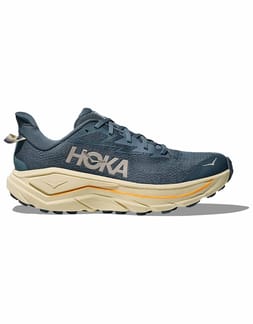
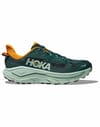
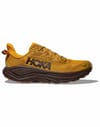


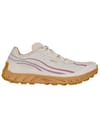


Norvan LD 4 GTX M Black Black
Men's trail


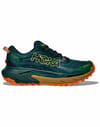


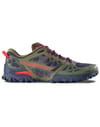

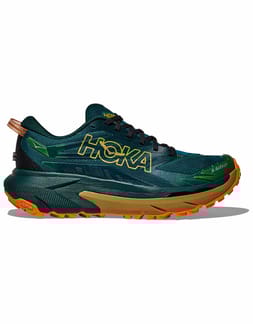




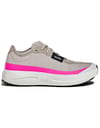
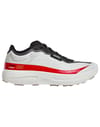


Challenger 8 M Faded Navy/Pampass Grass
Men's trail running shoes -




This time, you're determined to run at least once a week. You're looking for technical and comfortable men's trail running shoes. Whether you're hitting your first trails or preparing for an ultra, discover our selection of men's trail running shoes from leading brands: Salomon, Hoka One One, La Sportiva and more. Grip, cushioning, protection-each model is designed for a specific terrain and stride.
Why choose men's trail running shoes?
On a mountain path, your feet face very different challenges compared to tarmac: sharp rocks, wet roots, steep slopes, unstable ground. A men's trail running shoe is designed for these conditions. Its lugged sole grips loose or slippery surfaces, a rock guard protects your toes from impacts, and the reinforced upper supports your foot during lateral movements. Compared to a road running shoe, it also offers better abrasion resistance, resulting in a longer lifespan even on demanding terrain. If you're hesitating between several options, our top 10 men's trail running shoes will help you decide.
Key features of trail running shoes
Before making your choice, a few criteria deserve your attention. Each one directly affects how the shoe performs on the trail:
- Grip and sole: the lugs on a Vibram sole or Contagrip determine traction. Deep lugs (5 mm and above) are ideal for muddy and soft ground, while a lower profile is better for dry, compact trails.
- Cushioning: generous foam absorbs shocks on long runs and protects your joints. Minimalist models bring your foot closer to the ground for better proprioception, a popular choice on technical terrain where sensitivity is key.
- Drop: this is the difference in height (in millimetres) between the heel and forefoot, affecting your stride. A low drop (0 to 4 mm) encourages a midfoot strike, while a higher drop (8 to 12 mm) suits heel strikers.
- Protection and support: rock guards, reinforced uppers, padded tongues and heel counters all work together to secure your foot on rough ground.
- Breathability and waterproofing: a GTX membrane (Gore-Tex) keeps your feet dry in rain or morning dew; a ventilated mesh upper is better for summer runs where breathability is key.
The best trail running shoe brands
Each manufacturer brings its own design philosophy. Salomon, for example, has become a trail reference thanks to high-performance trail running shoes that combine Contagrip grip and instant comfort. At the other end of the spectrum, Hoka One One focuses on maximum cushioning with thick, lightweight foam-a favourite among ultra-trail runners seeking lasting comfort over many hours.
For alpine and rocky terrain, La Sportiva draws on its mountaineering heritage to offer models with outstanding grip and robust construction. On Running stands out with its CloudTec technology, delivering impressive energy return in On Running trail running shoes. You'll also find Scott for their lightweight and responsive shoes, New Balance for versatility, Adidas Terrex for a complete outdoor range, and Saucony whose cushioning technologies (PWRRUN, Gel) provide reliable support and endurance mile after mile.
How to choose men's trail running shoes?
Consider the terrain and frequency of use
To select the ideal men's trail running shoe, consider your weight, the type of terrain you'll be running on, your training frequency, and the comfort you feel when trying them on. Here are some guidelines based on your activity:
- Rolling trails and forest paths: a lightweight shoe with moderate cushioning is enough. Sole responsiveness matters more than lug depth.
- Technical terrain (rocky, roots, mud): opt for a deep-lugged sole, protective reinforcements, and an upper that supports your foot on uneven ground.
- Mountain trails and elevation: a good balance of grip, stability and cushioning is essential. Look for a model with a rigid heel counter and a sole suited to rocky surfaces.
- Ultra-trail and long distance: choose generous cushioning, good support, and a slightly larger size (about one centimetre) to allow for foot swelling over time.
For more information, see our guide to choosing trail running shoes.
Choose according to your stride
Another important factor is your running style-how your foot strikes the ground: you may be a pronator (foot rolls inward), supinator (foot rolls outward), or neutral (foot lands straight). You'll find shoes adapted to your foot type, helping to prevent premature wear. Checking the wear pattern on your old shoes gives a good clue: more wear on the inside means pronation, outside means supination. If in doubt, a gait analysis in a specialist shop will guide you to the right category.
Don't forget to complete your trail kit: suitable trail running socks reduce friction and wick away moisture, while a well-fitted trail running backpack lets you carry water and supplies without hindering your stride.
FAQ about men's trail running shoes
How do you measure your men's trail running shoe size?
Measure your foot at the end of the day, when it's slightly swollen from activity. Place it on a sheet of paper, trace around it, and measure from heel to big toe. Allow about one centimetre more than your usual shoe size: on descents, your foot slides forward and a tight fit quickly causes blisters. Sizes vary between brands, so always check each brand's size guide.
Which shoe for ultra-trail?
Ultra-trail requires a shoe that stays comfortable over dozens of kilometres. Three qualities are key: enough cushioning to reduce muscle fatigue, a durable sole that maintains grip over time, and a roomy fit to accommodate swelling during long efforts.
Can men's trail running shoes be used for other outdoor sports?
Their grip and protection make them suitable for day hikes, fast hiking, or power walking. However, for climbing, mountaineering, or multi-day hikes, specific shoes designed for those activities are more appropriate. If you're looking for versatile models, see our full range of trail running shoes. We also offer a selection of women's trail running shoes with adapted fits and support.
How do you care for trail running shoes?
After each run, rinse your shoes with clean water to remove mud and small stones from the lugs. Remove the insole and let everything air dry, away from radiators or direct heat sources that could damage adhesives and deform materials. Machine washing is not recommended as it can damage waterproof membranes and reduce the lifespan of the cushioning foam.
When should you replace men's trail running shoes?
On average, replace your pair every 800 to 1,200 kilometres, depending on your weight, the model, and the terrain. Three warning signs: worn-down lugs that no longer grip, flattened or less responsive cushioning, or visible deformation of the upper around the heel or collar.


Our Bloch' letter


