


 Menu
Menu


Hiking/ Trekking Tents


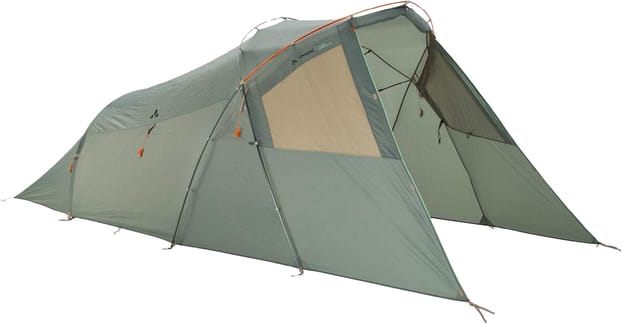


Stormbreak 3 Agave Green
3-person tent -





Stormbreak 2 Agave Green
2-person tent -



Looking for a tent that's easy to pitch in any weather? Want to carefully compare every feature? From a single-night bivvy to a long self-sufficient trek, your choice of tent determines the comfort and safety of your adventures. Snowleader guides you through technical features, construction types and leading brands to help you find the right model for every terrain, from lightweight hiking tents to the most demanding high-altitude shelters.
How to choose your trekking tent?
The first question to ask is how you'll actually use your tent. Do you need a tent for a single night out hiking, or for a longer trek? The criteria differ. For a weekend in the hills, weight is less important and you can opt for a more spacious model. For multi-day routes in full autonomy, every detail matters: weight, packed size, speed of pitching in the rain, and the strength of the poles in windy, high-altitude bivouacs. Don't forget to equip your feet with good trekking boots, an essential companion for a successful bivvy. Your tent is designed for a specific use, to withstand bad weather, UV rays or cold temperatures. It may be compact and easy to carry, or fully equipped and very spacious. The trekking tent comes in various shapes to accommodate 1, 2, 3 or more people. For more advice, see our complete tent buying guide.
Weight and packability
On a multi-day trek, your tent is often one of the heaviest items in your trekking backpack. Two-person models usually weigh between 1 and 2.5 kg, but ultralight hiking tents now drop below a kilo thanks to silnylon or Dyneema fabrics and DAC Featherlite poles. This quest for minimalism does mean less living space and sometimes reduced durability, so weigh up your priorities.
Beyond the raw weight, consider the packed size: your tent should fit easily in your backpack, ideally vertically along your back to keep the load balanced.
Weather resistance
The waterproofness of a hiking tent is measured in millimetres of water column, sometimes called Schmerber. The higher the number, the better the fabric withstands prolonged water pressure. For three-season trekking, keep these thresholds in mind:
- 2,000 mm minimum for the flysheet, enough for moderate summer conditions;
- 3,000 mm recommended for exposed routes with storms or heavy mountain rain;
- 5,000 mm for the groundsheet, to prevent moisture rising when camping on wet ground.
Wind resistance depends on pole quality, the number of guy lines, and the overall shape of the tent. If you regularly bivvy at altitude, also check for UV protection: well-treated recycled polyester will keep its mechanical properties much longer than entry-level fabrics.
Different types of tents
Two main families dominate the trekking and hiking market, each with its strengths. The dome tent, with its crossed poles, is freestanding: it stands up without guy lines, making it much easier to pitch on hard, rocky or wooden ground. It offers generous living space and its rounded shape is wind-resistant. It's a safe bet for three-season hiking in the hills.
The tunnel tent, with parallel poles, appeals to long-distance hikers for its excellent weight-to-space ratio. Properly pitched into the wind and well guyed, it handles gusts with impressive stability. It often has two doors and a large vestibule for storing bags or cooking under cover. Its main compromise: it's not freestanding and needs soft ground for pegs, so it's less suitable for rocky bivouacs.
For group trips or more static family stays, check out our family camping tents, designed for long-lasting comfort at camp.
Choosing your tent for the season and conditions
The expected climate on your route largely determines the type of tent to choose. The long-distance trekking tent is often customisable with adjustable vents and accessories. Otherwise, decide which season you need to cover and what type of tent to prioritise: ultralight and/or quick to pitch and pack, compact or maximum comfort. Mountain tents can be panoramic, freestanding, dome-shaped, etc. A three-season tent will easily cover spring, summer and early autumn in the hills. For winter or high-altitude trips, a four-season tent is essential, with reinforced poles, a flysheet reaching the ground, and reduced mesh in favour of solid fabrics to retain warmth.
Leading trekking and hiking tent brands
Our selection brings together the top names in bivvying and hiking, chosen for their proven reliability by hikers and mountaineers. American pioneers of minimalism, French altitude specialists or unbeatable-value European brands: each has its own signature.
MSR: innovation and durability
Founded in Seattle as Mountain Safety Research, MSR designs its tents with a clear focus on robustness in extreme conditions. The Hubba Hubba and Elixir have become trekking classics: easy pitching, wind resistance, and longevity after dozens of bivvies. The brand also works on sustainable materials and offers repair kits to extend the life of its models.
Big Agnes: lightness and comfort
From Colorado, Big Agnes has won over hikers seeking a rare balance: low weight without sacrificing interior space. The Copper Spur and Tiger Wall ranges offer impressive living space for models that weigh around a kilo, ideal for long routes where every gram counts over hours of walking.
Samaya: French altitude expertise
Born in the Chamonix valley, Samaya quickly became a benchmark for technical tents for expeditions and high-altitude bivvies. The French brand focuses on premium fabrics, ultralight construction and meticulous attention to detail, right down to the choice of zips and seam finishes. A top choice for demanding users heading into tough conditions.
Ferrino: Italian versatility
Founded in Turin in 1870, Ferrino remains one of the oldest European outdoor brands. Its range covers both lightweight trekking and high-mountain expeditions, with models that have accompanied many teams to Himalayan summits. For hikers, Ferrino offers hard-to-beat value, with robust builds designed to last through several seasons of intensive use.
Jamet: accessible trekking
This historic French manufacturer, Jamet, offers tents designed to make hiking and trekking accessible to as many people as possible, without compromising on reliability. The Oural and Dolomite 2/3 ranges have become trusted choices for beginners or those looking to kit out affordably, with honest performance in typical hill weather.
Nemo: creative bivvying
American brand Nemo Equipment stands out for its inventive approach: reimagined living space, patented ventilation systems, and practical accessories for everyday bivvy life. Nemo tents are popular with hikers who spend a lot of time under canvas and appreciate the comfort of small details at camp, while keeping weight down on the trail.
FAQ: all about trekking tents
What's the difference between a trekking tent and a hiking tent?
The two terms are often used interchangeably, but there's a subtle difference. A hiking tent is usually for short trips of one or two nights, where weight is less important than comfort. A trekking tent is designed for longer journeys: technical materials, minimal packed size, and a careful balance between lightness and durability to support you over several days in autonomy.
Which accessories are essential for making the most of a trekking tent?
A few extra items make a real difference in the field:
- a footprint to protect the groundsheet from abrasion and rising damp;
- pegs suited to the terrain: aluminium for soft ground, titanium or steel for rocky ground;
- spare guy lines and a pole repair kit, which can save the night if something breaks;
- a microfibre cloth to wipe away condensation before packing up in the morning.
How do you choose the right tent size for the number of people?
Bear in mind that manufacturer capacities (1, 2, 3 person) are calculated tightly, with no extra space for bags or clothing. In practice, choosing one extra berth above the number of occupants adds real comfort, especially for storing gear inside on rainy evenings. For two hikers on a multi-day trip, a three-person tent is often a wise investment for liveability.
How do you care for your tent after a hike?
On return, always dry your tent flat and out of direct sunlight before storing it: this is the golden rule to avoid mould and seam delamination. Gently brush off dirt and debris from the groundsheet, clean stains with lukewarm water (no harsh detergents that could damage water-repellent treatments), then store the tent in a breathable bag rather than its original compression sack. Finally, reproof the flysheet once a season as soon as water stops beading on the surface.


Our Bloch' letter


