


 Metropolitan France
 United Kingdom
 Deutschland
 Belgique
 Suisse
 Österreich
 España
 Italia
 Danmark
 Sverige
 Portugal
 Polska
 Luxembourg
 Other countries


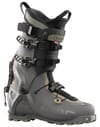
Crux Dark Gray
Men's ski touring boots -

 Home delivery from 07/10/2026
 60 days to change your mind
 No subject to promotional offers
The Crux Dark Grey is a men's alpine touring ski boot from the brand Head.
This highly versatile boot has been designed to minimise weight on the ascent while offering stiffness and precision on the descent.
Very comfortable when climbing, it offers a range of motion of 55° to facilitate your progress even on very steep slopes and is light enough to ensure good energy savings.
Its soft tongue provides a natural foot roll, thus avoiding unnecessary friction points to protect you from early signs of fatigue.
Its thermoformable liner remains stable and precise even during long outings with significant elevation gain, and holds the foot well with a last volume of 99 mm. It also features a Vibram® sole providing excellent grip and traction for walking and approach phases.
Climbing is good, but descending is better! That’s why once at the top, you just need to switch from walk to ski mode by activating the lever to lock the mechanism and fix the boot forward at 14° +/- 2°.
This inclination combined with a flex of 120 gives you a very pleasant balance between precision and comfort for committed skiing on the descent.
In summary, the Crux is a luxurious and all-round combo for skiers seeking lightness on the ascent and performance on the descent!


- Flex Index: 120
- Shell: Ultradry fiberglass
- Last: 1800cc
- 40 mm Velcro strap
- 3 micro-adjustable buckles
- Dynafit Low Tech Inserts
- CRUX Pro HP
- Tour insole
| VIBRAM® | Since the creation of the first rubber sole for mountaineering, the Carrarmato, over 80 years ago, Vibram has been a guarantee of quality and performance, innovation and design. Designed in 1937 by Vitale Bramani to meet the need for increased safety and protection in the mountains, our soles, adorned with the incomparable yellow octagon, are today used for outdoor activities, workplace safety, lifestyle, and orthopaedics. |
| RECCO® | RECCO® is an avalanche rescue system used worldwide to facilitate the rapid location of people. The two-part system includes a detector used by rescuers and reflectors integrated into clothing. Together, they enable quick localisation using radar but do not replace the use of transceivers. |



Sign up for our newsletter
Be the first to hear about promotions, sales, special offers, snowleader events, and new brands added to our catalog!
By signing up for our newsletter, you agree to receive our personalized emails and to allow us to track whether you open them. You can change your consent at any time after you first receive a communication, or after creating your account, if applicable.


