


 Menu
Menu


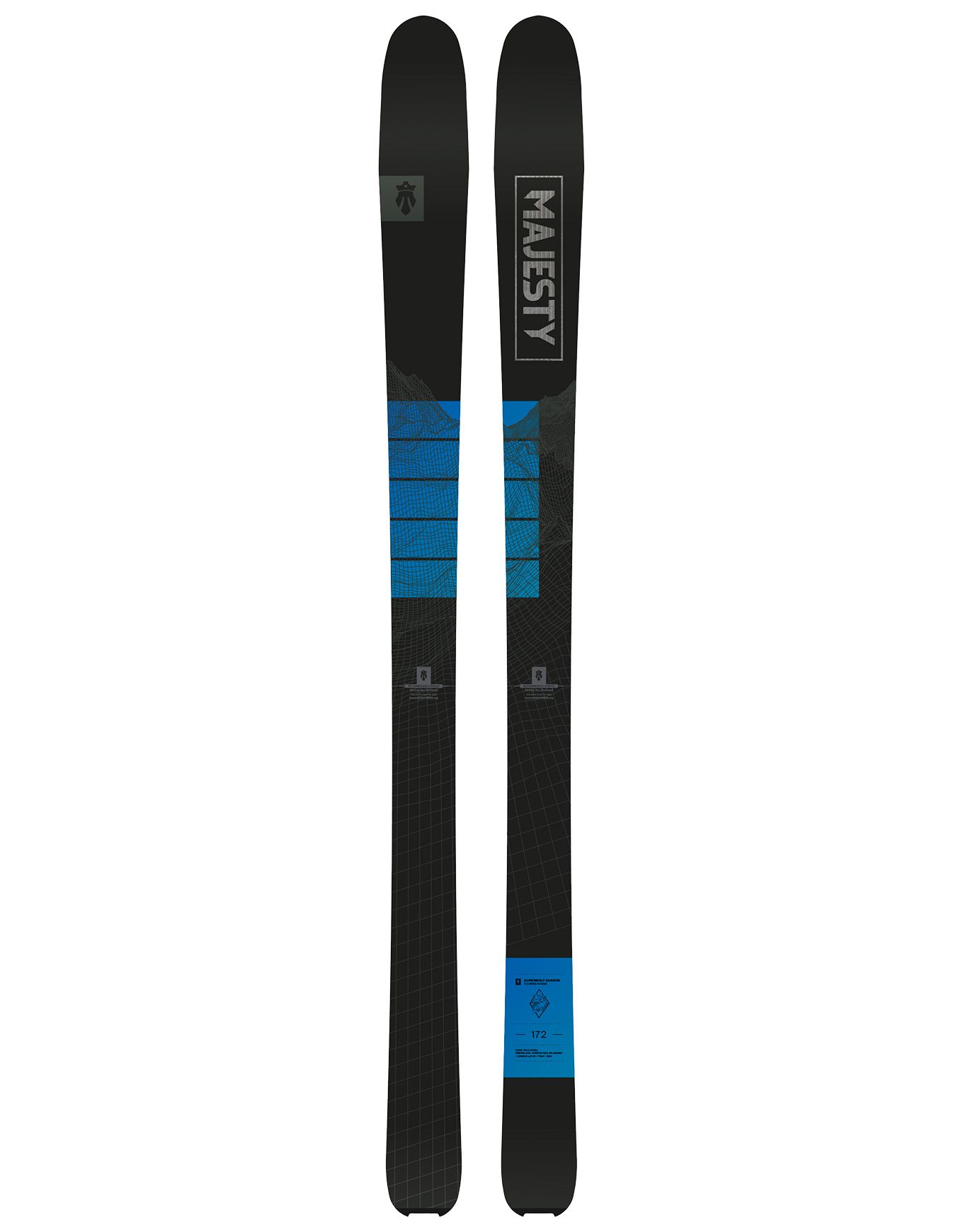


Superwolf Carbon 2026
Hiking skis - Unisex -


 Home delivery from 05/06/2026
 60 days to change your mind
 No subject to promotional offers


it's worth it!

The
The
With a slightly wider stance and a more generous rocker, it adapts well to a range of conditions, from deep snow to steep couloirs. At around 1,200g per ski in 172 cm, it's very light, so you can do one climb after another without tiring yourself out.
In terms of construction, it retains a light, responsive paulownia core reinforced with a layer of carbon/kevlar. Its fairly rigid flex, combined with a directional shape and a slightly rockered tail, gives it stability at high speeds and excellent handling when skiing more complicated, changing snow conditions. You'll also notice its handling in narrow passages.
The


| SIZE (cm) | SIDECUTS (mm) | RADIUS (m) | SKI WEIGHT (g) |
| 154 | 127-91-107 | 14 | 1000 |
| 160 | 128-91-108 | 15 | 1080 |
| 166 | 129-91-109 | 16 | 1260 |
| 172 | 130-91-110 | 17 | 1220 |
| 176 | 131-91-111 | 18 | 1370 |
| 184 | 132-91-112 | 19 | 1460 |
| Paulownia wood for lightness and responsiveness. | |
|
Aramid (Kevlar) is a synthetic polymer that is woven into fabric. Used in ski construction, it provides durability and acts as a shock absorber. Combined with carbon, which provides rigidity and torsion, this type of laminate offers first-class stability, performance and weight reduction. |
|
| A shorter tail length and a backwards skier position for faster, more versatile skis. | |
| The bases are made from P-Tex (polyethylene plastic). Most basic materials are followed by a number. This number refers to the molecular weight of polyethylene. The higher the number, the higher the molecular weight of P-Tex, indicating a better, more durable base. |
|
|
Sheet of reinforcement material (epoxy-impregnated fibreglass fabric) superimposed over the Core to support the central part of the ski. |
|
|
The rocker is the curve of the front or rear part of the ski when viewed from the side. In other words, the rocker refers to the arched section of the ski from the point of contact with the surface to the tip or rear end. Depending on the length and shape of the rocker, it can be called an automatic rocker, a flat camber rocker or an elliptical rocker. The rocker makes it easier to pirouette in Powder snow and gives you a feeling of freedom and forgiveness. It improves floatation and makes all-terrain handling effortless. |
|
| The heels of the skis are fitted with specially designed holes to allow precise positioning of the skins and reduce the possibility of the rear clip slipping during ascent. | |
| The camber describes the curve of a ski when viewed from the side. Skis with camber have a central section that arches slightly over the snow. Depending on the length and height of the camber, it can be distinguished as a traditional camber or a flat camber (zero camber). The Edge provides elasticity, suppleness, precision, responsiveness, good edge control and good ripping. |
Taillé pour pouvoir aller partout, le
Un ski de rando pour les gourmands d'aventures.
Les plus : Polyvalence en toutes neiges, maniabilité, poids dans sa catégorie.
Les moins : Accroche réduite sur neige plus dure.


Our Bloch' letter


