
Keep in touch


 Menu
Menu


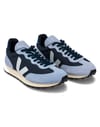
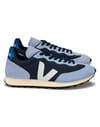


Rio Branco Alveomesh Nautico Menthol Steel W
Alveomesh trainers - Women - Rio Branco - Veja - Spring/Summer 2021
45,90 €
-60%
114,90 €
Unavailable

Advice : Use the foot sizer from SIDAS to help you find the right size
Rio Branco Alveomesh Nautico Menthol Steel W Not subject to promotional offers
45,90 €
-60%
114,90 €
 60 days to change your mind
 No subject to promotional offers
Get 0,92 € off your next order.
Description
The
The Rio Branco will accompany you to stroll around town or during your evenings, while being eco-responsible thanks to its upper and sole designed from organic and recycledmaterials
Its Alveomesh fabric composition provides breathability, flexibility and lightness.
A beautiful pair of shoes that combine style and simplicity!

Discover related categories
Technical details
Size
Normal
Overview
Product details
Weight (g)
700
Shoe material
mesh
Other features
- Lower part in alveomesh
- V Logo on the Side
- Made in Brazil, in the region of Porto Alegre
- Alveomesh stem: 100% recycled plastic bottles
- Leather suede inserts
- Rubber V Logo on the side
- Midsole - 53% bio-sourced: sugar cane
- Outsole: rice waste (23%),Amazon rubber (19%) and recycled rubber (12%)
- Insole - 64% organic-sourced and recycled: sugar cane (34%), Amazon rubber (11%), organic cotton (lining, 11%) and recycled E.V.A. (8%)
- Soft lining (33% organic cotton and 67% recycled plastic bottles)
- Laces: 100% Organic cotton
| ALVEOMESH | Alveomesh is a technical fabric made exclusively from recycled plastic bottles. It brings breathability, softness and lightness to the shoe. |
| SUEDE | Suede is the reverse side of a leather that is sanded to give it a soft and supple appearance. It comes from farms in Rio Grande do Sul. It is tanned in Brazil according to REACH standards. The use of water is reasoned during the tanning process. This suede is then coated with two water-repellent oils to protect the trainers from light rain. The tanneries working with VEJA are certified by L.W.G. |
| LEATHER | The leather comes from farms in Rio Grande do Sul. It is tanned in Brazil according to the REACH standards. The use of water is reasoned during the tanning process. The tanneries supplying VEJA leather are L.W.G. certified. Gold by the Leather Working Group, which promotes sustainable practices that have a positive impact on the environment in tanneries. |
| AMAZONIAN RUBBER |
Each VEJA sole is made of 20 to 30% rubber from the Amazon rainforest. Syringeiros (rubber bleeders) are paid according to the principles of fair trade. The use of this Amazon rubber increases the economic value of the forest and protects it from deforestation. |
| SOFT LINING | This jersey lining is made of 33% organic cotton and 67% recycled polyester (PET) from recycled plastic bottles. |
| ORGANIC COTTON |
The canvas is made of 100% certified organic cotton, without the use of pesticides or chemical fertilizers. Cotton is cultivated in Brazil and Peru by associations that respect people and the environment, according to the principles of fair trade. In Brazil, cotton is organic and agro-ecological, an agriculture that enriches the land after it has been cultivated by enhancing the complementarity of the species that are grown and the water retention in the soil. In Peru, organic cotton farmers are accompanied in their certification and have technical and financial support to improve their production. |


Our Bloch' letter


